
What issues should be considered in non-standard mechanical design?
Recently, the Ministry of Science and Technology has released the "13th Five Year Plan for Scientific and Technological Innovation in the Field of Advanced Manufacturing Technology", which strengthens the support for scientific and technological innovation in "Made in China 2025", promotes the industrial structure to move towards the mid to high end, strengthens manufacturing innovation, reshapes new competitive advantages in the manufacturing industry, and meets the needs of China's economic transformation and upgrading strategy. The Special Plan points out that during the 13th Five Year Plan period, the advanced manufacturing field will focus on deploying key tasks around 13 main directions from four levels: "system integration, intelligent equipment, manufacturing foundation, and advanced manufacturing technology innovation demonstration projects", including non-standard automation equipment, additive manufacturing, laser manufacturing, intelligent robots, and advanced manufacturing technology innovation demonstration projects.
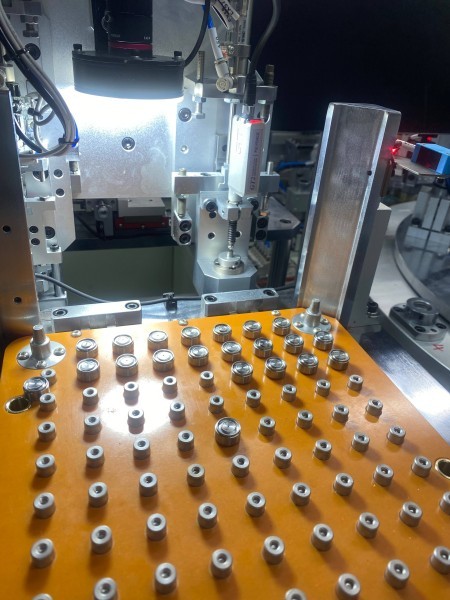
This is another strong support from the Chinese government for the reform and development of the manufacturing industry after "Made in China 2025". Intelligent manufacturing has risen to the national strategic level, and with industrial technology reform, the latest technological means will flood into this field.
Opportunities brought by the transformation of industrial manufacturing towards intelligence
The 21st century is an era of "smart economy, smart world" led by green and intelligent manufacturing. Since the German federal government proposed the "German Industry 4.0" strategy in 2013, governments and multinational manufacturing giants have taken precautions and accelerated the layout of their own manufacturing transformation paths. Currently, the fourth industrial revolution led by intelligent manufacturing is sweeping across the globe.
Application scenarios and system construction of industrial Internet of Things
Wen Yanbing, the head of the Department of Economics at Zhejiang University of Finance and Economics, stated in an interview with reporters that intelligent manufacturing has the characteristics of strategic, high added value, technology intensive, and leading role, and has multiple effects on economic growth. Manifesting as: firstly, direct driving effect, intelligent manufacturing has faster production efficiency, better product quality, greater economies of scale, higher product value, and can quickly and directly produce various intermediate and final products, directly increasing national output; The second is the indirect driving effect. Intelligent manufacturing often integrates and connects the entire product manufacturing process and industrial chain through information, communication, and industrial technology, playing an important driving role in upstream and downstream enterprises and key industries; Thirdly, it has strong technological spillover.
To achieve intelligent manufacturing, flexible production is the most critical link, which emphasizes customer personalization and customization. In theory, it means connecting raw materials, factories, distribution, and customers together. Customers only need to place one order, and the factory will automatically purchase raw materials according to their personalized needs, arrange production, and then directly deliver the goods to the customer.
Among them, the Internet of Things is an important technological foundation for achieving flexible production in industrial intelligent manufacturing. In intelligent manufacturing, each device is interconnected through the Internet of Things technology, and each enterprise is interconnected through the Internet to finally achieve information and data fusion; Process design can be quickly matched, production processes can be flexibly adjusted, and personalized needs can be quickly met in the end; The entire value chain of the factory gains value, the enterprise's efficiency is improved, and the end customers can receive good services; All resources can be reasonably utilized, work and life can be balanced, and ultimately provide scientific basis for decision-makers' decisions.
Data shows that in 2015, the output value of intelligent manufacturing in China was around 1 trillion yuan, and it is expected to exceed 3 trillion yuan in 2020, with a compound annual growth rate of about 20%. As Director Wen said, the rapid development of intelligent manufacturing will indirectly drive the prosperity of various industrial technologies. The advanced technology of using the Internet of Things as an important driving force for intelligent manufacturing will gradually expand the market with the continuous advancement of intelligent manufacturing.
