
What are the selection principles for PLCs in automated production lines
The PLC (Programmable Logic Controller) of an automated production line serves as its brain. It is a digital computing and operating electronic system specifically designed for use in industrial environments. It utilizes a programmable memory to store instructions for executing logical operations, sequence control, timing, counting, and arithmetic operations. Through digital or analog inputs and outputs, it controls various types of mechanical equipment or production processes. Now, let's discuss the principles for selecting an automated production line.
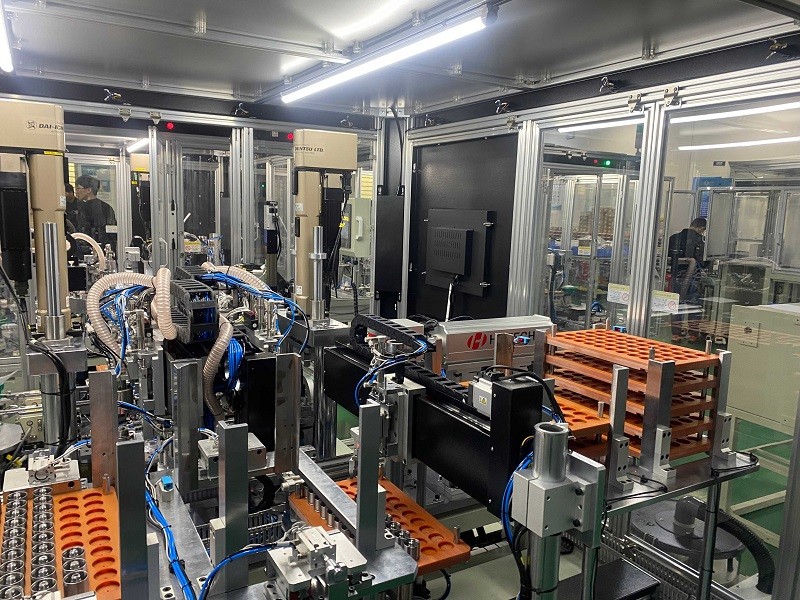
1. The selection of PLC for automated production lines should maximize the satisfaction of the control requirements of the controlled object. Fully utilizing the functions of PLC and maximizing the satisfaction of the control requirements of the controlled object are the primary prerequisites for designing a PLC control system, which is also the most important principle in the design process.
2. For selecting an automated production line PLC, designers are required to conduct in-depth field investigations and research before design, fully collect on-site control data, and gather relevant domestic and foreign information. At the same time, close cooperation with on-site engineering management personnel, engineering technicians, on-site operators, etc. is necessary to develop control schemes and jointly solve problems and difficulties in the design process.
3. The PLC of the automated production line must ensure the safety and reliability of the control system. Ensuring the long-term safe, reliable, and stable operation of the PLC control system is an important principle in the design of the control system. This requires designers to consider comprehensively aspects such as system design, component selection, and software programming to ensure the safety and reliability of the control system.
