
Automation is the future development trend in China
Some business executives claim that within the next five years, these technologies will transform the operational modes of factories in China, while also addressing the labor shortage caused by the increasing reluctance of young people to engage in manual labor.
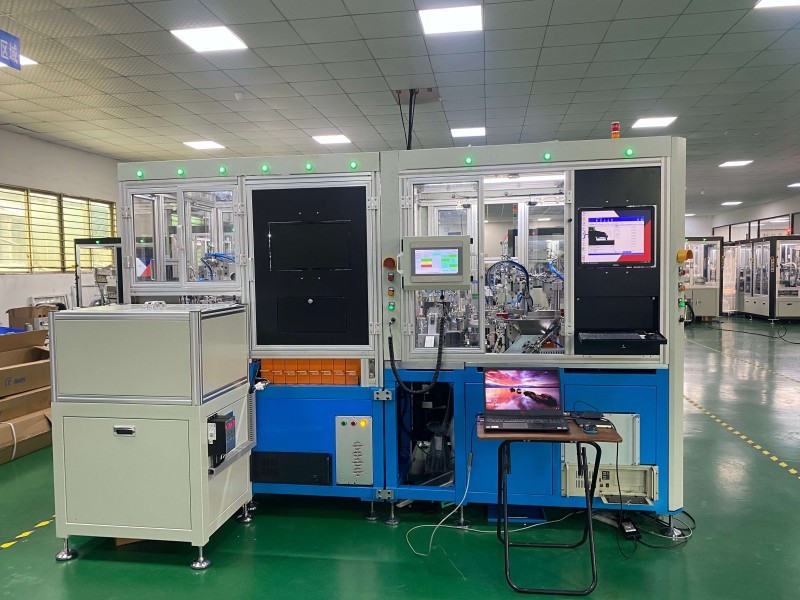
However, when developing such a system, scientists must consider an important factor, which is to ensure that the computer's response is not dangerous, rude, or confrontational. To address this issue, the researchers invited a psychologist to participate in the research. Research expert Vaz Gonzalez pointed out that communicating with robots actually places greater responsibility on humans, because once a problem arises, it is impossible to blame the computer. He said, "Having rights also means having responsibilities. All conversations are recorded, which makes it easier to hold someone accountable in case of mistakes. This is a good side effect."
Of course, traditional robot manufacturers are not the only ones gearing up to capitalize on the revolution in the electronics manufacturing industry. For instance, ABB Group, a global leader in power and automation technology, and Kuka, a German automatic machinery manufacturer, are also positioning themselves. Asian electronics suppliers, such as Delta Electronics and Foxconn Technology Group, are also striving to develop better robots. Furthermore, some smaller automatic machinery companies, such as Universal Robotics A/S from Denmark, are also eager to participate.
However, some executives are cautious about this. In their view, China's automation transformation is likely to take several years and will face numerous challenges, including the high price of advanced robots, persistent technological limitations, and a lack of flexibility.
Tim Li, Vice President of Quanta Computer Group, pointed out, "If your orders decrease, you can lay off workers, but you can't lay off robots."
It is worth mentioning that Delta Electronics is a “newcomer” in the field of robot manufacturing. It is understood that this electronics supplier has been manufacturing power adapters for well-known companies such as Apple. However, in 2012, the company embarked on a more ambitious project: producing inexpensive robots that could replace human labor in electronics factories.
Since its inception in the 1960s, robot technology has been rapidly advancing worldwide, with increasing levels of humanoid resemblance. Undeniably, robots are getting closer and closer to us, continuously influencing our lives. Due to the widespread application of industrial robots, the speed of automobile production lines has been greatly accelerated, directly leading to lower prices and the widespread adoption of cars in households. Smart devices such as robotic vacuum cleaners have also begun to emerge in the home appliance market, attracting the attention of many consumers.
Humans have once feared robots, worrying that they might "occupy" the Earth and threaten human survival, as depicted in some science fiction movies. But at least from the current perspective, such a scenario is still far away. What we need to do is to make them better serve humanity. Of course, for China, the road to developing robots is still long. But at least, the dawn has appeared.
Recently, researchers from Waseda University in Japan have introduced a new type of humanoid household robot. It combines safety, reliability, and dexterity, specifically designed to serve the elderly, disabled, and other mobility-impaired individuals.
This robot stands at 1.47 meters tall and weighs 111 kilograms. Apart from the red joints and hands, its entire body is pure white. Each of its hands has four fingers, and each finger is equipped with 241 pressure sensors, boasting extremely high sensitivity. It can even pick up a straw with its fingers.
“It’s clear that automation is the trend for China in the future,” Delta’s chief executive, Hai Yingjun, said in an interview. “But the question is how to bring down the cost of robots. We believe we can do that. The reason is simple: We make two-thirds of the components ourselves in the process of making robots.”
Delta is currently testing a one-armed robot with four joints that can move objects, assemble parts and perform simple tasks. The company hopes to market the robot by 2016, with a price tag of about $10,000, which is less than half the cost of today’s mainstream robots.
Without a doubt, the price of such robots is cheaper than the salary of workers. After all, robots can work 24 hours a day.
Delta believes it can achieve its low-price goal through cost advantages.
However, to be honest, the cost of most robots is much higher than that of factory workers, but with the continuous rise in workers' wages, this cost gap is narrowing.
Advances in robotics technology have raised hopes among electronics companies that they will bring some manufacturing tasks back to the United States. However, industry insiders believe that even if automation becomes relatively simple, electronics assembly is likely to remain in China, as the larger-scale component supply chain is still located there.
