
How to determine whether non-standard automation equipment is needed
Nowadays, many enterprises are facing labor shortages and high labor costs, leading to an increasing trend of replacing human workers with machines. However, what kind of positions are suitable for machine substitution? There are even no ready-made standard equipment in the market, requiring the customization of non-standard automation equipment to replace human workers. How to define and determine the necessity of customizing non-standard automation equipment to replace human workers is particularly important.
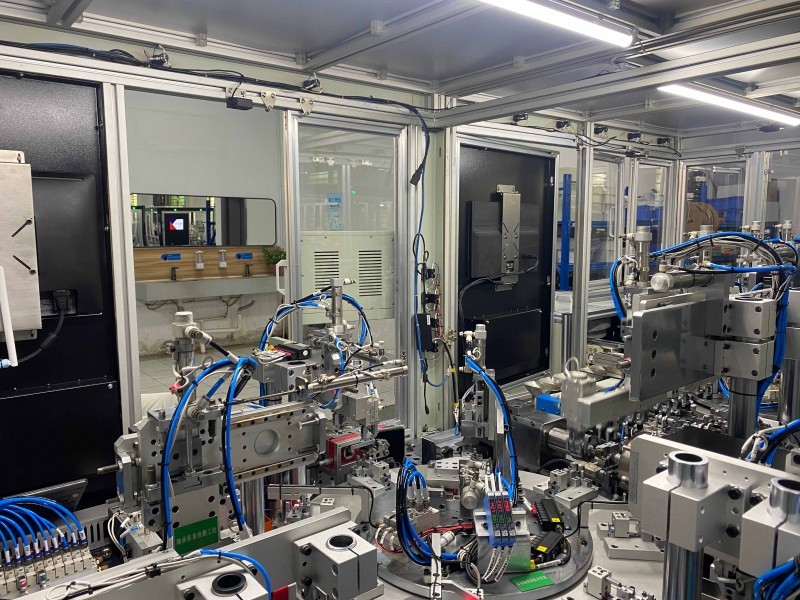
Purchasing non-standard automation equipment is a crucial issue that all production-oriented factories must consider when establishing their plants. Understanding the key considerations when purchasing non-standard automation equipment can save manufacturers a lot of unnecessary trouble and also reduce a significant amount of subsequent expenditure for the factory.
When purchasing non-standard automation equipment, the first thing to consider is your own situation
1. Is it necessary to introduce automation equipment for this process
Generally, the introduction of automation equipment to replace manual operations is considered in the following situations:
1. Poor working environment, such as spray painting and welding operations;
2. Manual operations lead to unstable product quality or failure to meet customer requirements;
3. The product is large or heavy, making manual operation difficult.
4. The production cycle and lifespan of the product are long.
For automation aimed solely at saving manpower, I personally suggest a cautious evaluation.
II. Whether the process is suitable for implementing automation equipment
1. Component stability: Whether the quality of products flowing down from upstream is stable. If the components are unstable, the quality of products processed by the equipment may not be as good as that produced manually, and it may also cause frequent equipment downtime.
2. Operational complexity: The complexity of operations determines the cost of automation equipment and the feasibility of automation equipment technology. Even for industrial robots, complex assembly tasks are difficult to achieve.
3. Packaging method of components: If automatic feeding is desired, the original packaging method needs to be changed to allow the feeding mechanism to grasp the components. The cost increase incurred due to the change in packaging method needs to be factored into the automation cost.
4. Separability of components: If manual feeding is desired, the separability of components needs to be evaluated. This is especially important for small parts such as screws.
III. How can automated design meet the requirements of the lean model
1. Use small devices that handle single tasks, rather than large devices that handle multiple tasks; the more complex the device, the higher the cost, the worse the reliability, and the lower the flexibility in responding to changes in demand;
2. Do not blindly pursue high-speed equipment. The efficiency of equipment should be based on the principle of meeting demand and ensuring product quality.
3. Try to avoid batch processing equipment as much as possible. Although batch processing equipment has certain advantages in efficiency, it can hinder flow and make the production cycle too long.
The second aspect to consider when purchasing non-standard automation equipment is after-sales service. If such a high-priced machine encounters a problem and requires maintenance, it can incur significant costs. Therefore, it is essential to choose an automation equipment manufacturer with excellent after-sales service. They should not only provide door-to-door delivery and installation services for the purchaser, but also promptly respond to any issues that arise during use. This will minimize the impact of machine malfunctions on the purchaser's production activities.
The third point to consider when purchasing non-standard automation equipment is the price. Price is a very sensitive topic, and I believe all buyers hope to buy better equipment with less money. However, we all know that price and product quality are linked. Therefore, we should not blindly pursue small gains and purchase machines that are cheap. Although these machines may be cheaper to buy, they are definitely inferior to those that are slightly more expensive in terms of performance during use. The money spent on maintenance and repair of these machines in the later stage is also considerable. However, this does not mean encouraging everyone to purchase those particularly expensive machines. What we need to choose is a machine with a moderate price, and at the same time, we should select some manufacturers with excellent reputation.
