
The relationship between non-standard automation equipment and intelligent manufacturing
The 2017 International Conference on Smart Manufacturing, jointly hosted by the Chinese Academy of Engineering and the Ministry of Industry and Information Technology, was recently held in Beijing. According to various information disclosed at the conference, the promotion of smart manufacturing has made significant progress in the transformation and upgrading of China's manufacturing industry, and new intelligent technologies will further accelerate the implementation of smart manufacturing.
Lu Yongxiang, former Vice Chairman of the Standing Committee of the National People's Congress, attended the meeting and delivered a speech. Miao Wei, Minister of Industry and Information Technology, delivered a keynote speech titled "Deeply Promoting Intelligent Manufacturing and Accelerating the Cultivation of New Driving Forces for Global Economic Development". Zhou Ji, President of the Chinese Academy of Engineering and Honorary Chairman of the China Mechanical Engineering Society, also presented a report titled "Digital Manufacturing, Intelligent Manufacturing 1.0, and Intelligent Manufacturing 2.0".
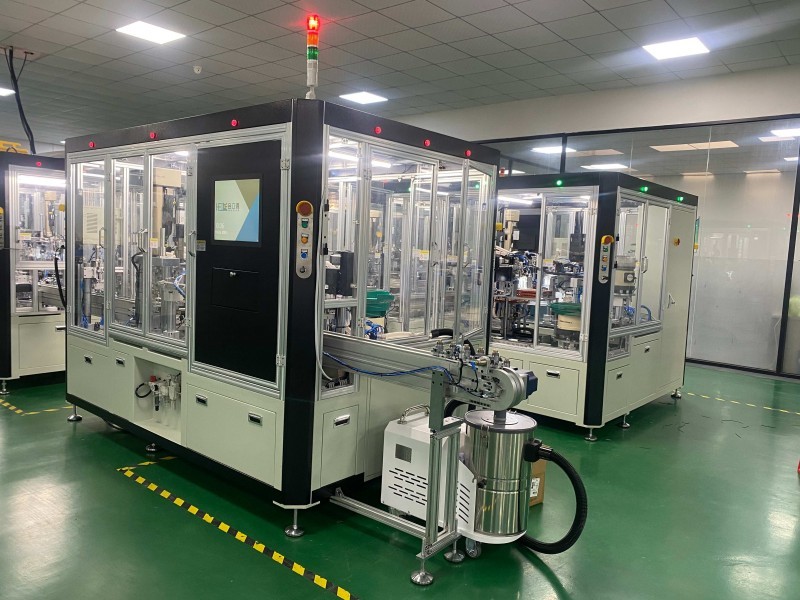
Digitalization and intelligence penetrate deeply into the global manufacturing service chain
In today's world, countries are intensifying their efforts to develop smart manufacturing and seize the opportunities presented by the new round of technological revolution. The new industrial revolution, centered around non-standard automation equipment and smart manufacturing, has become a focal point of international attention. Lu Yongxiang pointed out that Germany's Industry 4.0, the United States' Industrial Internet, "Made in China 2025," the UK's Industry 2050 strategy, Japan's unmanned factories and collaborative robots, among others, have injected strong impetus into the innovation of networked smart manufacturing services, and have also provided new opportunities, methods, and spaces for global cooperation and sharing. The development of the world's manufacturing industry is about to usher in a new era.
In the mid-20th century, the invention of computers and CNC machine tools ushered in the era of digital manufacturing. Technologies such as semiconductors, integrated circuits (ICs), programmable controllers, industrial control software, fieldbus, automated guided vehicles (AGVs), and industrial robots supported the development of CNC centers and CNC production lines, pushing the manufacturing industry into the flexible manufacturing stage. In the new century, technologies such as the Internet, the Internet of Things, big data, VR/MR, AI, cloud computing, and 3D printing have undergone rapid changes, advancing digitalization and intelligence to the entire industrial chain and ecological chain of manufacturing services. From terminal intelligence to terminal/cloud collaborative intelligence, from intelligent control based on measurement sensors and model programs to network system intelligence based on visual perception, mixed reality, cloud computing, and big data, from a single roof and factory to global network intelligent design, manufacturing, and services, and from micro-meter material reduction manufacturing to nano-precision material reduction/addition manufacturing. This provides new possibilities for realizing zero inventory, zero waste, zero downtime, and zero mismatch in digital, networked, personalized, and customized intelligent design, manufacturing, and lean management services through collaboration.
Smart manufacturing is the key to fostering new global driving forces
China's manufacturing industry is currently in the stage of industrial upgrading, transitioning from traditional manufacturing to advanced manufacturing. For China, "Made in China 2025" has identified smart manufacturing as the main focus and breakthrough point. Miao Wei pointed out that China has achieved positive results in the development of smart manufacturing. Grasping the core of smart manufacturing will undoubtedly have a significant and far-reaching impact on deepening the integrated development of manufacturing and the Internet, and strengthening the foundation of the real economy. It is reported that China has issued the "Smart Manufacturing Development Plan", "Guidelines for the Implementation of Smart Manufacturing Projects", "Guidelines for the Construction of the National Smart Manufacturing Standard System", and other documents. Significant progress has been made in some key technologies and equipment such as high-performance large-scale metal component laser additive manufacturing equipment and distributed control systems (DCS). A number of relatively mature, reproducible, and scalable new smart manufacturing models, such as network collaborative manufacturing and large-scale personalized customization, have been explored and formed, continuously deepening international cooperation in smart manufacturing at the national, local, and enterprise levels. Overall, through the joint efforts of all parties, a social consensus on promoting smart manufacturing has been formed, and the results are continuously emerging.
Miao Wei emphasized that we must proactively adapt to the development trend of smart manufacturing. Based on a good start, we should accelerate the cultivation of the smart manufacturing ecosystem and promote the in-depth development of smart manufacturing. Firstly, we should thoroughly implement the smart manufacturing project and fulfill the key tasks of "five, three, fifty"; secondly, we should continuously promote the pilot demonstration of smart manufacturing and actively carry out the construction of national smart manufacturing demonstration zones; thirdly, we should focus on enhancing the basic supporting capabilities of standards, industrial software, industrial internet, and information security; fourthly, we should actively cultivate the smart manufacturing ecosystem and create system solution providers with industry characteristics.
Three of the four driving forces of the new economy are related to ICT
At the 2017 International Conference on Smart Manufacturing, Zhou Ji pointed out that the exponential growth of information technology, the widespread application of digitalization and networking, system-integrated innovation, and breakthroughs in artificial intelligence technology are the four major driving forces behind the new round of economic development.
First and foremost is the exponential growth of information technology. For 50 years, the legendary Moore's Law in the semiconductor industry has marked a leap forward for the entire information industry, encompassing not just chips but also computers, networks, communications, and other information technologies. Especially in the past decade, new information technologies such as mobile internet, cloud computing, big data, and the Internet of Things have achieved collective breakthroughs almost simultaneously, all exhibiting exponential growth trends.
Next is the widespread application of digitalization and networking. The scope of digital and networked applications is boundless, bringing information services into the era of inclusive computing and networking, and truly sparking a revolution.
Next, we have technology convergence and system integration innovation. System integration innovation is a brand-new approach to innovation. The various technologies it employs may not be the latest creations, but the combination of these technologies constitutes revolutionary innovation. Apple's smartphones and Truss electric vehicles are successful examples of system integration innovation. The greatest opportunity in the future lies in the interaction and convergence between new technologies and existing technologies, which will disrupt future technologies and industries.
Lastly, there is the strategic breakthrough in the new generation of artificial intelligence technology. In recent years, artificial intelligence has developed rapidly worldwide, achieving not only quantitative breakthroughs but also qualitative leaps. Due to the exponential growth in the learning capabilities of intelligent machines and the complexity of tasks they can perform, the development and widespread application of new AI technologies will significantly outpace the pace of previous technological revolutions. The new generation of AI technology has become the core technology of the new technological and industrial revolution, and will be the key technology that disrupts economic development and human society in the next few decades.
Zhou Ji emphasized that AI 2.0 technology will lead smart manufacturing from 1.0 to 2.0. He stated that the goal of smart manufacturing 1.0 system is to achieve digitization and networking of the manufacturing industry. The most important feature is to achieve network interconnection and system integration on the basis of comprehensive digitization, and its technical level is equivalent to industrial 3.5. The goal of smart manufacturing 2.0 system is to achieve digitization, networking, and intelligence of the manufacturing industry, realizing true smart manufacturing.
Intelligent manufacturing will be implemented in three major stages
Smart manufacturing is a broad concept encompassing the digitization, networking, and intelligence of the manufacturing industry. It is composed of three progressive manufacturing systems with different paradigms: digital manufacturing, Smart Manufacturing 1.0, and Smart Manufacturing 2.0. At the same time, it is also a large-scale systems engineering, which requires understanding and advancing systematically from five dimensions: product, production, mode, foundation, and system.
In Zhou Ji's view, intelligent manufacturing systems consist of the following four aspects:
Firstly, intelligent products constitute the mainstay. Digitalization, networking, and intelligence are technologies that facilitate the innovation of mechanical products, driving them towards the development of the "numerical control generation" and even the "intelligent generation". This fundamentally enhances product functionality, performance, and market competitiveness. For instance, railway locomotives have made China one of the countries with the most advanced high-speed locomotive technology in the world.
Secondly, intelligent enterprises are the main focus. Digitalization, networking, and intelligence are also technologies for production technology innovation, which enable the manufacturing industry to develop towards intelligent integrated manufacturing systems, build intelligent enterprises, and comprehensively enhance the levels of product design, manufacturing, and management. For example, Siemens Chengdu Engineering has achieved digitalization and networking throughout the entire process from design, product research and development, production, to logistics and management.
Thirdly, the theme is the transformation of industrial models. The application of digitalization, networking, and intelligent technology has spurred the transformation or innovation of industrial models. On the one hand, there has been a shift from large-scale assembly line production to customized mass production. On the other hand, the industrial form has transitioned from production-oriented manufacturing to service-oriented manufacturing. Overall, the fundamental industrial model has shifted from being product-centric to being user-centric. For example, GE has leveraged technological innovation to enable big data collection and analysis of engine blades and all engine data. For engines, it is no longer about fault diagnosis but rather a health assurance system. With such technology, GE now not only sells products but also adopts a business service model based on hourly payment, transitioning from production-oriented manufacturing to service-oriented manufacturing.
Fourth, the construction of intelligent manufacturing infrastructure. This includes building information-physical systems, actively promoting the construction of industrial Internet infrastructure, strengthening the intelligent manufacturing standard system, information security guarantee system, and the construction of network information platforms centered around new-generation artificial intelligence technology.
