
How to improve the quality of domestic non-standard automation equipment
In recent years, with the continuous increase in labor costs, more and more enterprises have begun to pay attention to the field of industrial automation equipment, especially non-standard automation equipment. Unlike traditional standard equipment, which is simple to manufacture, non-standard automation equipment brings new development opportunities to the industrial manufacturing industry with its flexible customization, convenient operation, and diverse functions. China's non-standard automation equipment has begun to emerge, but it has encountered many obstacles in the development process.
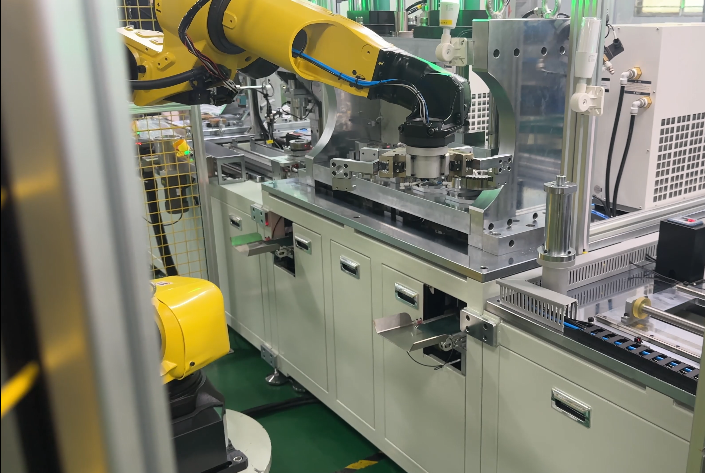
The demand for non-standard automation equipment is robust
In the past, the vigorous development of China's manufacturing industry relied on a large number of cheap labor forces. However, times have changed. With the decrease in new labor force in recent years and the improvement of people's living standards, labor is no longer a cheap resource. It has become increasingly common to find it difficult to recruit workers. In order to meet production needs, automated production has gradually gained recognition and attention from business owners. As an important component of automated production, non-standard equipment has become increasingly popular over the past 10 years, and a large number of non-standard equipment manufacturers have emerged in the market.
In post-financial crisis China, non-standard automation equipment is bound to flourish. Experts indicate that the demand for automation equipment among enterprises is increasing day by day. Due to the diverse specific situations of various enterprises, the demand for non-standard automation accounts for a significant proportion. The expenditure on non-standard equipment and machinery can be budgeted in advance. The non-standard automation market will grow rapidly, and the depth of automation product application will continue to increase. For example, in the injection molding industry, many injection molding enterprises tailor-make a suitable non-standard automation solution based on their actual situation, and widely apply industrial robots and manipulators to achieve "unmanned factories" and "light-free workshops", maximizing the savings in production costs.
Current development status of non-standard automation equipment
Although the non-standard equipment industry as a whole exhibits an evident upward trend, indicating a vast market space for non-standard equipment, with even certain traditional industries potentially becoming the most promising markets, China's non-standard enterprises are numerous but small in scale, with notable deficiencies such as outdated technology and homogenized competition. Furthermore, there is at least a 10-year gap between China and developed countries in this field. New non-standard automation equipment often incorporates mechatronics and fully utilizes the latest achievements in information technology. However, some design personnel in Chinese enterprises are unfamiliar with the products, hesitant or unable to choose them, greatly limiting the improvement of their level. Moreover, many core technologies are not truly independent, and relying on equipment imports clearly makes it difficult to reduce costs. Currently, high-end products such as industrial robots and servo motors are still mainly imported from abroad.
From a market logic perspective, expanding market space can enhance a company's technological research and development capabilities, expand its scale, and provide favorable development opportunities. However, the objective situation is contrary to this. Domestic non-standard equipment companies have not escaped the vicious cycle of low quality and low price. They continue to engage in simple imitation, have not developed their own distinctive or patented products, and have not accumulated sufficient funds for enterprise development. Currently, small workshops with a dozen employees remain the mainstream form in the non-standard equipment industry.
Although the non-standard automation equipment industry as a whole exhibits a clear trend, with a vast market space for non-standard automation equipment, and even some traditional industries potentially becoming the largest market, the proportion of domestically produced non-standard automation products is steadily increasing as a group of similar domestic enterprises grow!
