
Provide excellent after-sales service for non-standard automation equipment
1) Quality is designed, manufactured, and inspected, and it is definitely not achieved through after-sales service
After-sales service is largely influenced by the quality of the equipment itself, and the root cause of these quality issues can be traced back to design and manufacturing. During the design and development phase, whether the DFM report has been fully communicated and confirmed with the customer regarding its feasibility for use and production manufacturing, as well as the feasibility of processing, assembly, and debugging, often leads to quality hazards in the equipment during the design and development stage due to communication differences and misunderstandings.
II) What is sold to customers is not only equipment hardware, but also the output of operation and maintenance technology
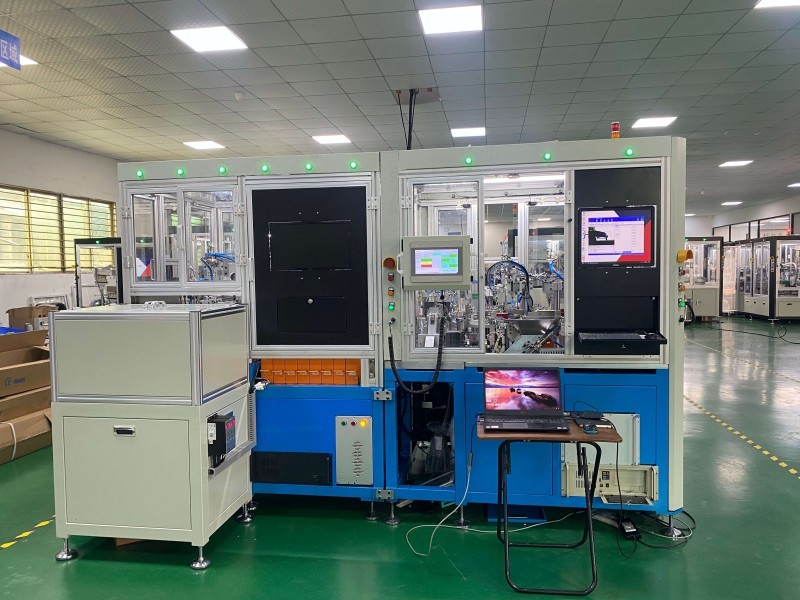
For non-standard automation equipment sold to customers, we should assist customers in training operation and maintenance technicians. This is to ensure that customers can use the equipment reasonably, safely, and perform routine maintenance, maximize equipment efficiency, extend equipment service life, and reduce equipment failure rate.
Secondly, customers can handle equipment malfunctions or the replacement of wear parts on their own, improving the timeliness of problem resolution and reducing the cost of after-sales service.
III) Utilize modern communication technology to innovate remote after-sales service
We need to establish a clear after-sales service contact point with technical personnel to facilitate communication and exchange. Leveraging modern communication technologies such as mobile phones and computers, we can provide remote guidance for customer operations and maintenance! For remote after-sales service, it is necessary to classify common faults according to standalone malfunctions, online malfunctions, actuators (mechanical components), sensors (electrical components), controllers (system hardware), programs, and systems. This will enable us to quickly diagnose and address faults, reduce online waiting time, and enhance service efficiency and quality!
4) Establish a system for reporting after-sales issues, and learn from others' experiences to avoid mistakes
The handling of after-sales issues should be categorized, documented, and archived for future tracking and inquiry. The handling of non-standard automated assembly after-sales issues should be promptly reported to other relevant after-sales personnel, design and development personnel, processing and manufacturing personnel, quality inspection personnel, and customers. Learning from others' experiences can help reduce or avoid the recurrence of problems, and establish effective feedback channels and tracking mechanisms.
5) Quality improvement of after-sales team members
After-sales service is an extension of sales and represents the comprehensive image of a company. Therefore, the overall quality of after-sales personnel is also highly required! After-sales work cannot be effectively supervised, so the self-discipline of after-sales personnel is required to be high. Non-standard automation equipment after-sales work involves direct interaction with customers, requiring a certain level of communication skills, honesty, respect, tolerance, the ability to swallow grievances, and a broad vision. After-sales work is about solving problems, so technical ability must be strong, knowledge must be broad, and the ability to handle things independently is required.
