
Domestic enterprises in non-standard automation machinery are starting to make their mark
In recent years, with the rapid development of the economy, China's position as the world's second largest economy has become increasingly solid. Among them, the contribution made by industrial development should be the first. China has become a recognized world factory. However, Hua, the general manager of Nantong Zhunxin Automation Technology Co., Ltd., an industry expert, believes that it is not commensurate with this that most enterprises are still in the initial stage of manual operation and labor-intensive production. In western developed countries, unmanned production workshops have long been achieved through automated machinery and equipment. However, our country still relies on the vast majority of labor force to produce products. This is a big gap.
The market demand is robust
With the development of industry, the demand for workers in various sectors has seen a significant increase. In the production sector, the wages of workers in labor-intensive enterprises constitute a substantial expenditure, and costs are escalating rapidly. Given the need to ensure product quality, we aim to produce cheaper products. The only viable path is to reduce production costs and enhance production efficiency. The speed of manual operations is limited. Regardless of the workstation or the product, we do not rule out the possibility of relying on machines for operations. However, workers' wages only rise and never fall (as stipulated by labor laws), and they must be paid on time every month. This expense increases with the extension of workers' years of service.
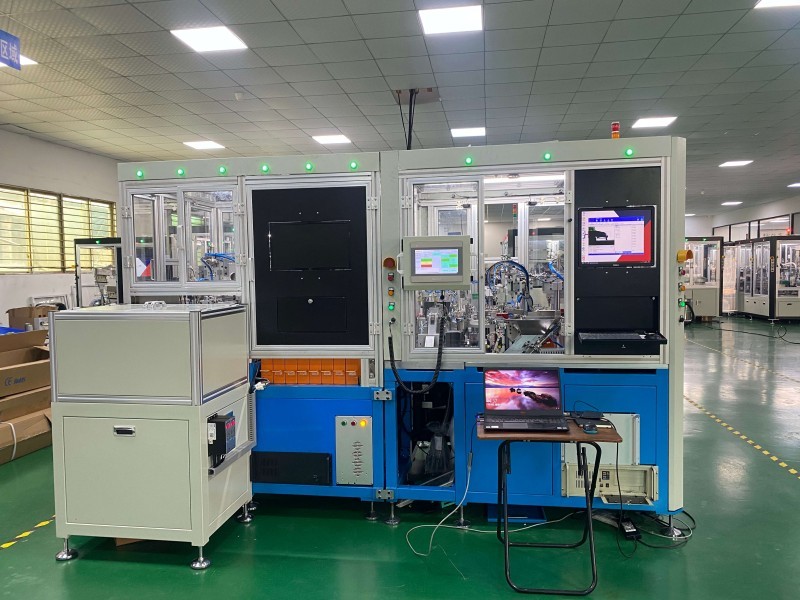
As a result, the demand for enterprises to adopt automation equipment is increasing. Due to the different specific situations of various enterprises, the demand for non-standard automation accounts for a large proportion. The expenditure on non-standard equipment and machinery can be budgeted in advance, such as machinery depreciation, electricity, gas, daily maintenance, and operator salaries. The productivity of one machine can be equivalent to several (at least) to dozens or even hundreds of people. Of course, the faster the speed, the higher the cost of the machine. The production cost of the product is maximally saved. Moreover, the quality of the products produced by the machine is more guaranteed. After the financial crisis, non-standard automation equipment will inevitably flourish in China.
The proportion of domestic products is gradually increasing
The non-standard automation market is poised for rapid growth, with the depth of automation product application continuously increasing. In this field, there is a 10-20 year gap in the overall domestic level compared to developed countries. New non-standard automation equipment often features mechatronic integration, fully leveraging the latest advancements in information technology. However, some design personnel in Chinese enterprises are unfamiliar with electronic products, either afraid or unable to choose them, greatly limiting the improvement of their skills. Nevertheless, in the past decade, non-standard automation has seen significant application in Jiangsu, Zhejiang, Shanghai, the Pearl River Delta, and the Beijing-Tianjin region, and domestic enterprises are catching up.
As one of the outstanding representatives in the industry, Nantong Zhunxin Automation Technology Co., Ltd. is a diversified enterprise positioned to integrate non-standard automation machinery and equipment research and development, non-standard automation industrial control system integration, and non-standard automation industrial control product trade. By introducing Korean experts and collaborating with leading enterprises such as Samsung in research and development, they have quickly kept up with the latest international developments and formed a comprehensive service platform integrating research and development, production, and sales in the field of automation.
Currently, high-end products are still primarily imported from abroad. However, with the growth of a similar group of domestic enterprises, the proportion of domestically produced non-standard automation products is steadily increasing!
The survival and development of non-standard enterprises
With the continuous increase in labor costs, more and more enterprises are paying attention to the field of factory automation, which has also brought development opportunities to this industry. At the same time, how to improve service levels has become a pressing issue for the non-standard automation machinery industry. Currently, there are a large number of non-standard automation machinery enterprises in China, but they are generally small in scale, with common characteristics such as outdated technology and homogenized competition. How to participate in the competition in this industry has become a challenge!
Generally speaking, most small and medium-sized non-standard automation machinery enterprises currently face three major challenges: capital, talent, and market. Only by balancing these three aspects can they survive and have the opportunity to face potential market opportunities. Therefore, Mr. Hua believes that we must calm down, cultivate our internal strengths, and always adhere to the principle of credibility in serving every customer. We provide customers with an integrated solution from planning, processing, assembly to debugging. From product conception, planning, modeling, drawing, processing, assembly, to debugging, we provide customers with a complete set of solutions.
Because the technical threshold of this industry is relatively high, achieving this is not easy. It involves many links such as design, production, installation, on-site debugging, and after-sales service, making the construction of the enterprise team particularly important. Due to the small scale, how to overcome the difficulty of unclear division of labor is also a challenge.
Challenges bring opportunities. The favorable market prospects and development space are particularly attractive aspects of this industry. Enterprises that have survived the initial stage will inevitably embrace the rapid development of the industry.
