
The advantages of machine vision in non-standard automation equipment
Everyone knows that automation equipment refers to devices that can operate automatically without human intervention. Non-standard automation equipment, on the other hand, is customized according to the actual needs of users.
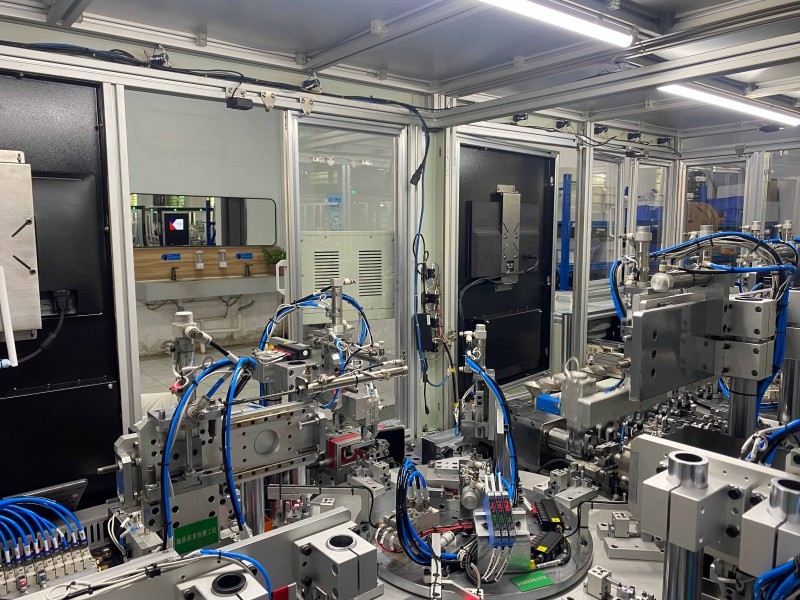
First, let's delve into several buzzwords and policies that have been gaining popularity in China recently. The concepts of smart manufacturing and Industry 4.0 have likely been reported by the news media frequently, and most people have heard of them. However, even those who aren't in the industry may only know these terms but have little understanding of their specific industries and what they actually entail. I am honored to be one of the practitioners in this industry, and from my perspective, I will briefly introduce these concepts to you.
Today, I'm going to talk about machine vision inspection and automation equipment, which are indeed part of the fields covered by "Smart Manufacturing 2025". Actually, this national policy covers a very wide range of aspects, mainly aiming to promote the upgrading of production equipment in the domestic industrial sector and fully automated production and processing. Currently, countries such as the United States, Germany, and Japan have done exceptionally well in this regard, achieving unmanned production and processing in many fields. In workshops spanning tens of thousands of square meters, only a dozen or so people are needed. What's even more interesting is that the level of fully automated slaughtering and processing in some animal slaughterhouses is shocking. To be honest, our country still has a long way to go in terms of equipment level.
The concept of machine vision inspection may not be familiar to those outside the industrial field, but this advanced technology is now widely used in the manufacturing industry. The main principle of machine vision is to capture images using industrial cameras, analyze and calculate the images using professional visual inspection software and various image algorithms, and provide the required parameters. By setting these parameters, we can achieve many purposes and functions, such as high-precision dimensional measurement of products, coordinate position of parts, reading of one-dimensional and two-dimensional code data, detection and identification of surface defects on parts, color recognition, angle recognition, etc. This technology has already largely replaced the human eye, and its inspection speed is 5-10 times faster than that of the human eye. Currently, such technology has been subdivided into many specialized fields, such as 3D scanning, face recognition, fingerprint recognition, autonomous driving, and other high-tech fields. This technology is still constantly being updated and improved, and its functions will become more and more powerful.
Non-standard automation equipment, in essence, involves designing a set of automatic mechanical mechanisms and electrical control logic based on customers' production steps and efficiency requirements. These mechanisms and logic replace and integrate human actions, enabling automatic feeding, assembly, testing, and inspection. Additionally, they save these data, allowing for tracking of production efficiency, yield rate, energy consumption, and other metrics.
Due to time constraints, I can only write so much. I will share some practical application cases with you later. By the way, for those young men who are currently choosing majors and about to enter university, I would like to say that majors like computer image analysis have a very promising future. Currently, there is a huge shortage of machine vision engineers, and the salary is very good, with monthly salaries generally exceeding ten thousand yuan.
